
Versatility in One Pass
Apply fertiliser, seed, trace elements, and biological products together.


Apply less nitrogen, more often, and manage down to work within your limits. Put your trace elements through the same pass. Magnesium, selenium, cobalt, copper, whatever your tests call for, applied little and often with the rest or as a mineral mix stuck to the leaf instead of dusted on.
Interested in a Tow and Fert for your operation?
Get a free info pack or book a demo with our team.
Apply fertiliser, seed, trace elements, and biological products together.

Apply less nitrogen, more often, and manage N use down to work within your limits and what the plant demands.

You don’t need rain to get nitrogen into a leaf. Go when the covers are right, not when the forecast and the truck line up.

Suspend magnesium oxide and lime flour directly in the tank. It goes on wet and even, with no dust.
Dairy farms are operating in a tighter, more scrutinised environment than ever before. Milk price volatility, rising fertiliser costs, nitrogen limits, and pressure to lift efficiency all mean the old approach of applying more granular fertiliser is no longer stacking up.
The Tow and Fert lets dairy farmers put several inputs on in one pass. Fertiliser, trace elements, lime flour and biological products, dissolved or held in suspension, applied as a foliar or onto the soil.
You set the rate, you pick the mix, and you pick the day. Less nitrogen, more often, on when the plant can use it.
We back it enough to bring one out and run it on your paddock. You can make your own mind up from there.
We're seeing more dairy farmers try foliar and fine particle application. We believe it's the way forward.
The idea with foliar nitrogen is to get as much of it as possible in through the leaf, so it isn’t waiting on the soil. Granular has to wait for moisture to wash it in, then for soil microbes to convert it before the roots can use it.
Independent EIP Wales research on four Welsh dairy farms, funded by the Welsh Government Rural Communities Rural Development Programme, ran conventional prilled nitrogen against a foliar mix of urea and humic acid over three seasons.
In the first two years the foliar plots ran on roughly a fifth to a third of the nitrogen, 46 to 93 kg N/ha against 205 to 275. Dry matter came in 1 to 3 t/ha below conventional, though nitrogen use efficiency was two to three times higher. Foliar was ahead in places: 0.5 to 1.0 t/ha more up to the end of April in 2019, and higher yields at two of the four sites in 2020.
In the final year the foliar rate was lifted to about 100 kg N/ha. Dry matter came out comparable to conventional at three of the four grazed sites, on 40 to 50% of the nitrogen. Site 1 was the exception, which the report puts down to field conditions rather than the nitrogen, possibly low magnesium and lighter soil in the foliar plot during a spring drought. It was one plot per treatment on each farm, with no replication, so it’s a farm-scale demonstration rather than a replicated trial.
The evidence isn’t all one way. A New Zealand trial (Risk & Dawson 2019) found no difference when nitrogen went on in one hit at 25 or 50 units. The Field Notes set out why we think rate per pass is the reason.
Tow and Fert systems are designed specifically to make this practical at dairy scale. Farmers can apply nitrogen, sulphur, magnesium, trace elements, lime flour, seed, and biological products in one pass, tailored to pasture demand and seasonal conditions.

When milk price and fertiliser pricing both fluctuate, efficiency matters more than ever.
The goal is simple. Smaller amounts of nitrogen, applied more often, timed to the round instead of the spreader’s schedule.
A ryegrass leaf can only take in so much at once. Ask it to absorb 50 or 60 units in one hit and it can’t, so the rest sits on the leaf, runs off, or ends up on the soil surface behaving like the granular you were trying to improve on. Published work puts the useful range at roughly 4 to 20 units per pass (University of Copenhagen 2023 synthesis). Most farmers we work with land at 10 to 20, and that’s where we’d expect the difference to show up.
So the method is 8 to 10 passes a season rather than two. Low rates, dissolved or in suspension, onto cover of about 1800 to 2000 kg DM/ha, which is where an on-farm New Zealand trial (Schofield, Watt & Schofield 2013) applied it at 150 litres a hectare. It’s not about days since grazing, it’s about having enough leaf back to catch it and going before the cows are due.
You don’t need rain to put nitrogen on a leaf. You go when the covers are right and the conditions suit.
Running less nitrogen per pass lets you manage your total down. What you do with the room that opens up is your call, and farmers land in different places.
There’s a second thing that follows. Pull the bag nitrogen back and the clover comes with it, because soil nitrogen is what was suppressing it. The Welsh trial found exactly that: clover content tracked total nitrogen applied, most in the nil nitrogen plots, least in the conventional ones. Clover fixes its own nitrogen, so that’s grass grown on nitrogen nobody bought.
We believe this is the way forward. Rather than argue about it, we’ll bring a machine out and run it on your place.
Tow and Fert machines are designed and built in Dannevirke, for New Zealand dairy country. The range runs from a 500 litre machine towed behind an ATV through to a 4000 litre unit covering 40 hectares a load, so it scales from a small block to a large herd.
They’re now working across fourteen countries across five continents.
What the machine does is put several inputs on in one pass, at low rates, when you decide to go. Nitrogen, sulphur, magnesium, trace elements, lime flour and biological products, dissolved or held in suspension.
What farmers do with that is their business, and they land in different places. Some run less nitrogen. Some hold the nitrogen and chase more grass. Some use it to get under a cap without giving up covers. The Farmer Stories are individual accounts of individual farms, and they’re worth reading for the range rather than for a number.

Dairy farming is no longer about applying more inputs. It is about applying the right inputs, at the right rate, at the right time.
Tow and Fert puts the fertiliser programme back in your hands. You pick the mix, the rate and the day, and you can change your mind when the conditions do.
Get started
Talk to our team about the right setup for your operation. No obligation.
WHAT’S BUILT IN
We built the Tow and Fert to do what most standard sprayers can't.
| Feature | Tow and Fert |
|---|---|
| Even spread, under 15% COVEven application you can measure, test it on your own farm | Tow and FertYes |
| Dissolves 1 part urea to 2 parts water, fastHigh-concentration mixes without clogging or long load times | Tow and FertYes |
| Suspends 2 parts lime flour to 1 part waterKeeps heavy fine particles in suspension, evenly, all the way to the nozzles | Tow and FertYes |
| Boom recirculation on every nozzlePatented system, works even on single-nozzle machines - no blocking | Tow and FertYes |
| Purpose-built Metalform 3 inch stainless pumpEngineered in-house after off-the-shelf pumps couldn't take the punishment | Tow and FertYes |
| Runs at 20-22psi to protect biologicalsLow pressure keeps microbes and living inputs alive through application | Tow and FertYes |
| Onboard weigh scalesKnow exactly what's in the tank, load accurately every time | Tow and FertYes |
| Companion Mix appMix rates, nozzle selection and ground speed worked out for you | Tow and FertYes |
| 2,500+ strong farmer communityReal users sharing results, trials and advice, not just customers | Tow and FertYes |
| Commercial-grade build, over-engineered to outlastCommercial construction that keeps performing, day in day out | Tow and FertYes |
| Travelling service & support - globallyOn-farm support and servicing, not a phone queue | Tow and FertYes |
| Pioneered and built in New ZealandDesigned and manufactured in Dannevirke, over 15 years in the paddock | Tow and FertYes |
Tow and Fert machines aren’t just for nitrogen. One machine can spread fine particles, spray liquids and over-sow seed, so through the year it can take on jobs you’d otherwise need a spreader, sprayer or duster for.
Fertiliser: Urea, DAP, SOA, Elemental S, MOP, Gibberellic Acid, Effluent, Fine Phosphate Rock/DCP Powder Minerals: Mag Oxide, Mag Sulphate, Fine Lime Flour, Trace Elements Sprays: Thistle Sprays, Foliar Stickers Soil / Biological: Humates/carbon, Fulvic, Biologicals, Trace elements, Over-sow chicory, Over-sow Plantain, Over-sow Clover, Over-sow turnips, Seaweed, Fish Hydrolysate
Fertiliser: Urea, DAP, SOA, Elemental S, MOP, Effluent, Fine Phosphate Rock/DCP Powder Minerals: Zinc Oxide, Zinc Sulphate, Other Trace Elements Soil / Biological: Fine Lime, Gypsum, Humates, Trace Elements
Fertiliser: Urea, DAP, SOA, Elemental S, MOP, Gibberellic Acid, Effluent, Fine Phosphate Rock/DCP Powder Minerals: Copper and Other Trace Elements Sprays: Thistle Sprays, Foliar Stickers Foliar / Soil / Biological: Humates/carbon, Fulvic, Biologicals, Trace elements, Over-sow chicory, Over-sow Plantain, Over-sow Clover, Over-sow turnips, Seaweed, Fish Hydrolysate Stickers
Fertiliser: UAN, SOA, Foliar Applied K, Fish Hydrolysate Minerals: Iodine, Selenium Soil / Biological: Seaweed Extract, Fine Lime, Humates
Tow and Fert is also used commonly for: Fire Fighting Pressure Washing/Washdown Trough Emptying/Cleaning Culvert Clearing Milk Powder Mixing Hydro-seeding Fertigation/Feeding Dosing Pumps for Pivot Irrigation Compost Slurries/Extracts
Whether you’re exploring options or ready to go, our team can help you find the right Tow and Fert setup.
Farmer Stories
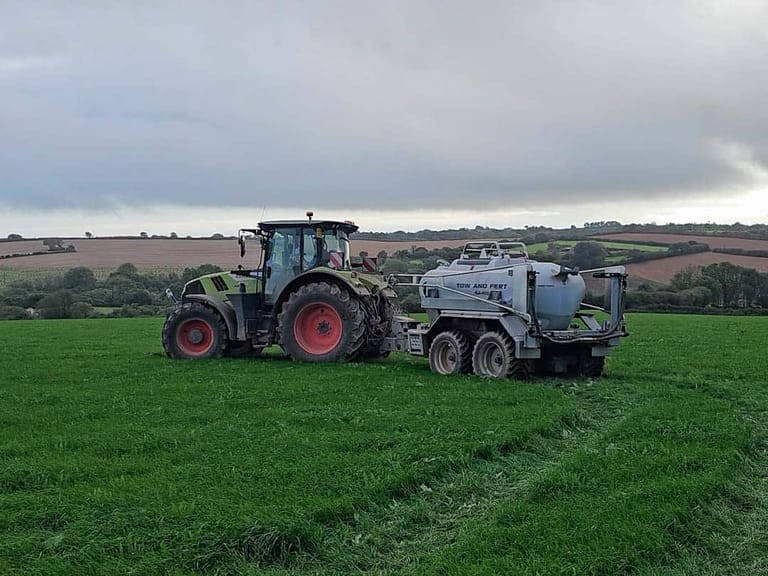

Harry Miller
Devon, England
Rethinking nitrogen on old arable ground Harry Miller milks 550 spring-calving cows on a grass-based system on the South Devon coast. It’s a rented farm, and when he took it on 12 …
Read story →

Geoff Homer
Marlborough, United Kingdom
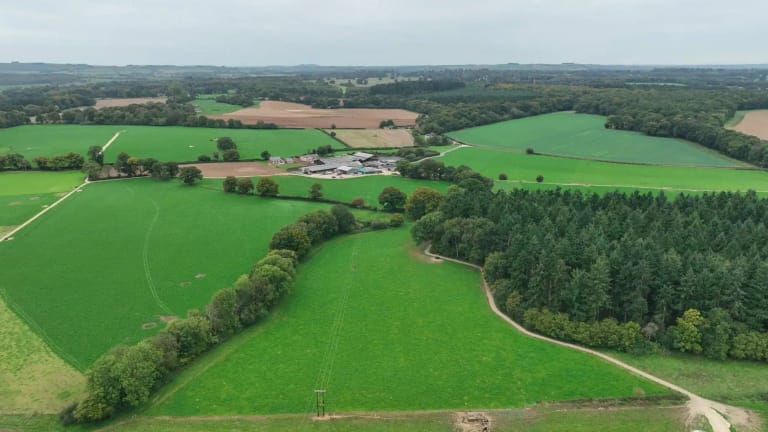
“I can melt urea through this at 70p a litre”: Geoff Homer on foliar, arable and rethinking the jigsaw Geoff Homer had already moved his herds from solid nitrogen to liquid-applied…
Read story →