
Dave van den Beuken
Waikato, New Zealand
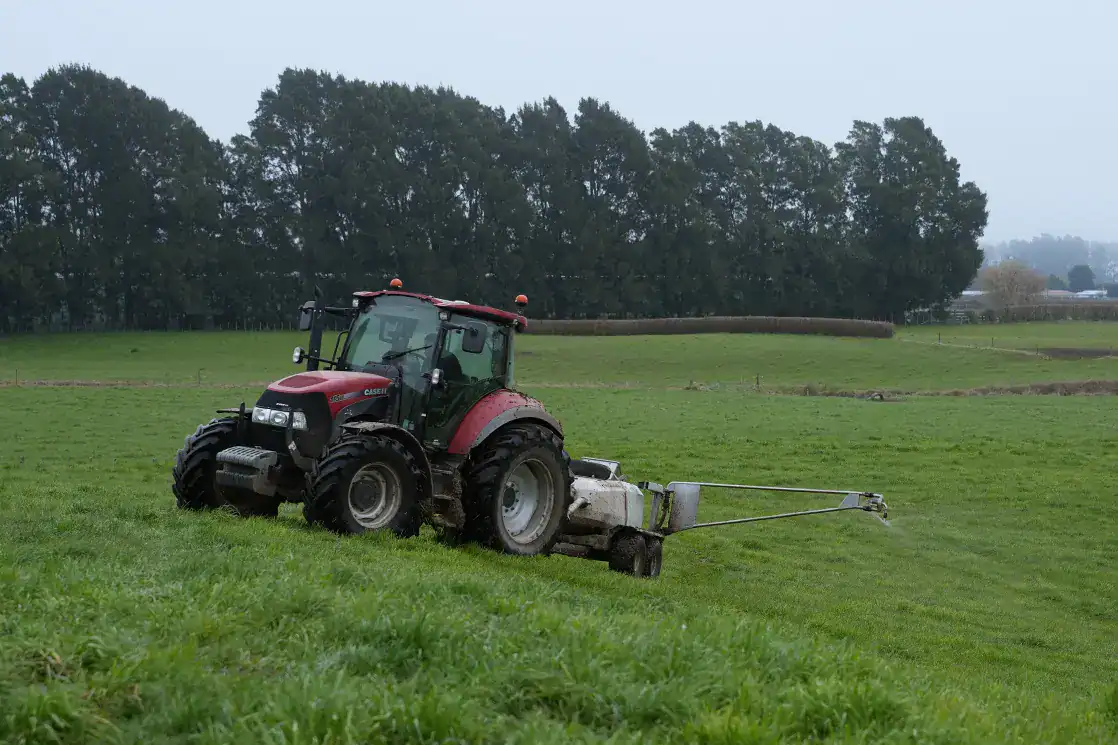
This story was filmed in 2026 and reflects one farmer’s own experience with their Tow and Fert. Every farm is different, so please treat it as a story rather than a forecast for your place.
Following the cows with nitrogen through a Waikato winter.
On 120 hectares near Cambridge, Dave van den Beuken and his partner Jenny Buckley milk 360 cows. “We’ve been here for 20 years, and for 10 years of that we’ve been winter milking,” Dave says. “We started off split calving, but now we’re 100% autumn calving, calving in March. We’re dry through these summer months.”
The switch was a practical one. “This farm typically gets dry. We’ve had total brownouts maybe three or four times in that time. It’s very difficult to milk cows in the summertime. So milking cows in the winter, we’ve always got green grass and we fill in the gaps with supplement.”
A nitrogen programme built around the weather
Growing grass through winter takes nitrogen at the wettest time of year. Dave typically uses 120 to 150 units of N a season, with about half of that going on through winter and early spring.
For years that meant working around the ground conditions. “We’d put on nitrogen every six weeks and we’d try and pick a day it was dry enough to get trucks on, do the whole farm in one day, and if it was too wet for the trucks then we’d bring in a helicopter.”
The prompt to rethink it came from the farm’s environmental reporting. “When Fonterra do our numbers, we’re not happy with our nitrogen leaching numbers, so we started looking at the way we put on nitrogen.”
From spreader to sprayer
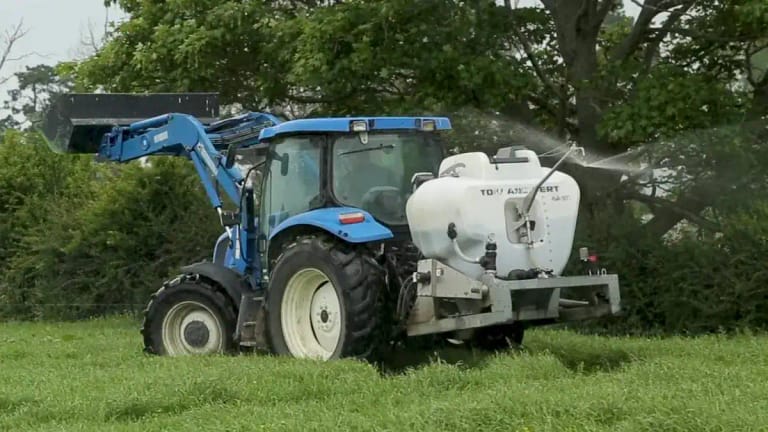
Dave’s first idea was a spreader of his own. “First of all I thought we might buy a fert spreader and just follow the cows with the nitrogen. And then I started thinking of different ways of putting it on, and that’s where the Tow and Fert idea came.” He began looking into dissolving urea and spraying it.
He did his homework before committing. “First of all I went online and had a look, and then I wanted to see one and touch one.” A Tow and Fert rep brought a machine out to the farm. Dave also put the question to other farmers on the Waikato Autumn Calving Facebook page. “A few people answered and said they were getting good results, and [that] gave me confidence to try it.”
In the end a second-hand machine came up for sale in Taranaki, and he bought it.
Little and often, one grazing at a time
Thinking about Tow and Fert?
Talk with a specialist
Tell us about your operation and we’ll match the right model and setup for you.
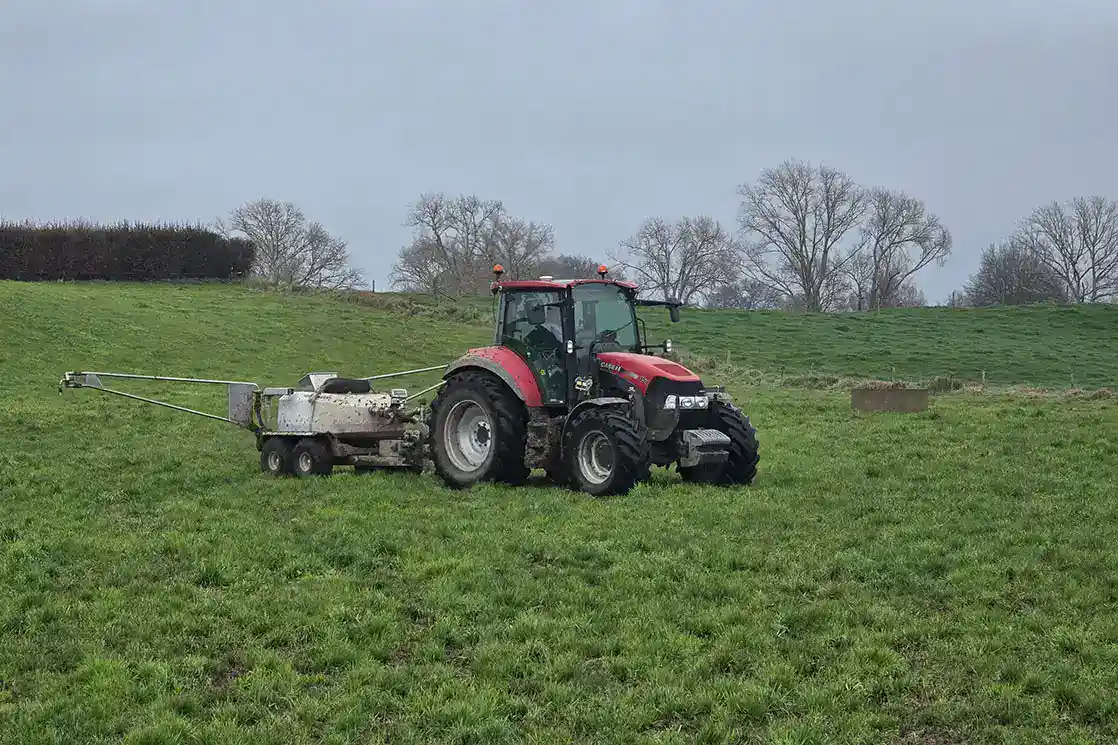
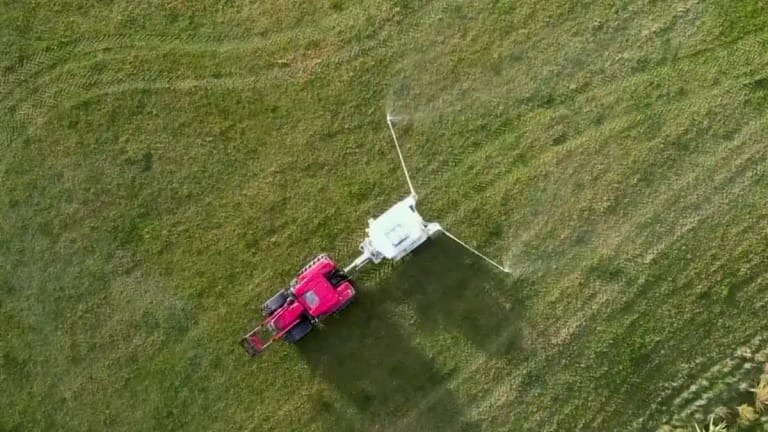
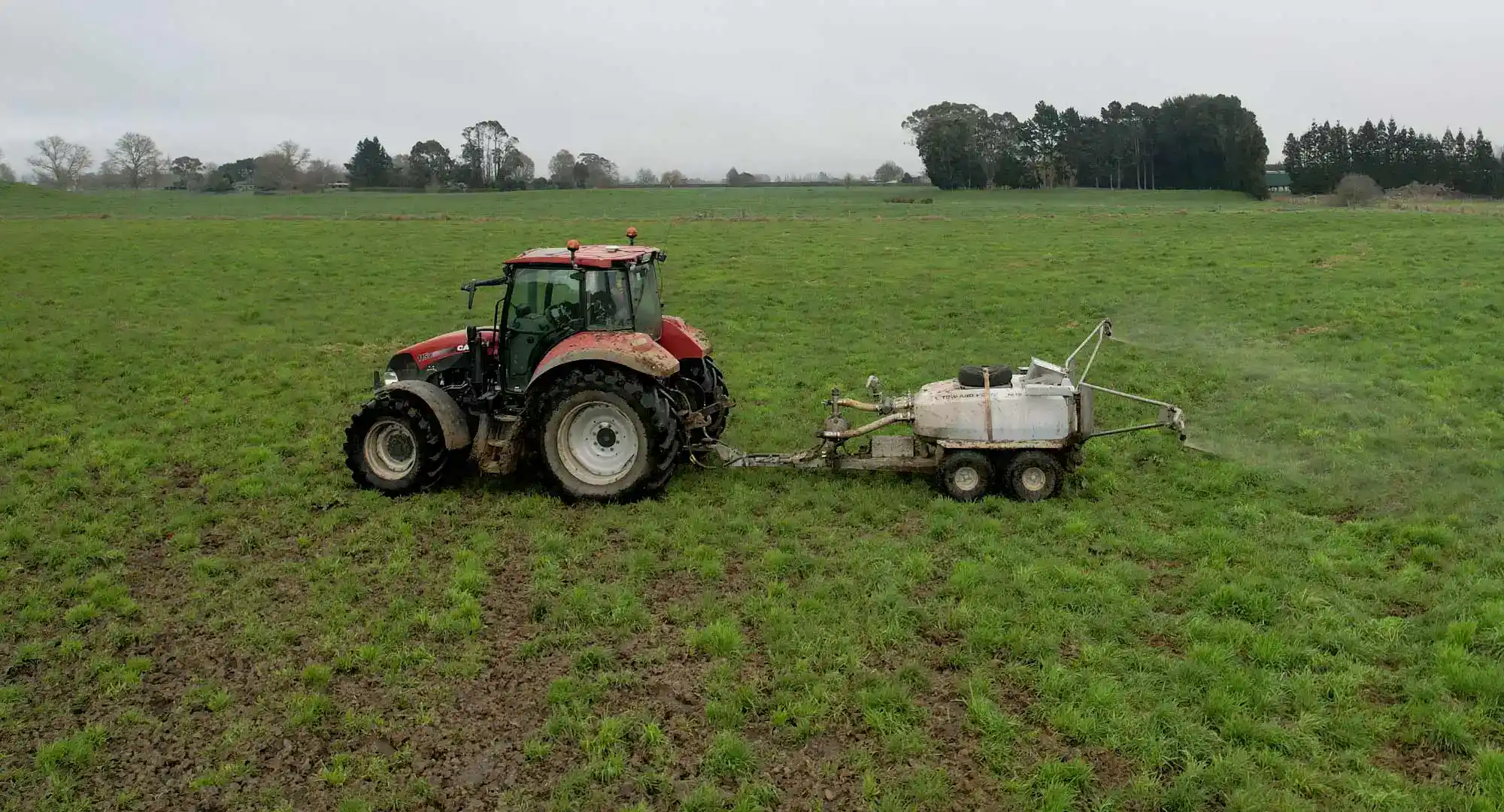
Dave now applies nitrogen behind the cows rather than across the whole farm in one hit. “Instead of putting 30 units of N on traditionally, we’re going in at 14 to 15 units of N each time the cows graze the paddock, so essentially it’s half the rate and getting the same result.”
Timing has taken some fine-tuning over winter. “With using it in the winter the regrowth is a bit slower, so I was going in five days after grazing, which I think might have been a bit quick. So I typically go in at seven to ten days after grazing, and I think I’m getting better results.”
Honest about the fiddly bits
Dave mixes his own blend from straight urea and caprolactam SOA, with a little sodium humate in the tank, and doesn’t pretend it’s effortless. “It’s a bit fiddly to fill and mix. We’re having to use two bags, two mixes. That’s a little bit fiddly but it’s doable, you know, I can live with it. Once you get into a routine the loading process is pretty easy.”
The Tow and Fert app takes care of the maths. “I always refer to that app and put in what I want to use and how many hectares I want to cover, and it’s so easy. You just put it all in and it just tells you what your mix is.” It also gives him the spreading width to set on his GPS.
Out in the paddock, he likes the simplicity. “I just love how the machine’s got a fob. You just press the button, the arm’s in, and then you press another button and it just starts and stops. It’s just so user-friendly.”
What he’s seeing in the paddock
Dave is measured about what he’s noticed so far. “I think we’re getting a thicker pasture, less visible urine patches, and yeah, it’s just a rich green colour.”
For now the machine is doing one job, but he expects that to change. “At this stage we bought the machine just to put on our nitrogen, but I guess as I get more familiar with it I might try some different brews and we’ll see how we go.”
He’s also clear about what comes next. “Now that I’ve seen the value in the machine and the results with using half the amount, I think it would be a sound investment to buy a new one.”
His advice to anyone still weighing it up is simple. “If you’re on the fence with one of these machines, just get a rep out, have a look at it and they’ll demo it. It really does make sense by putting the nitrogen straight onto the leaf.”